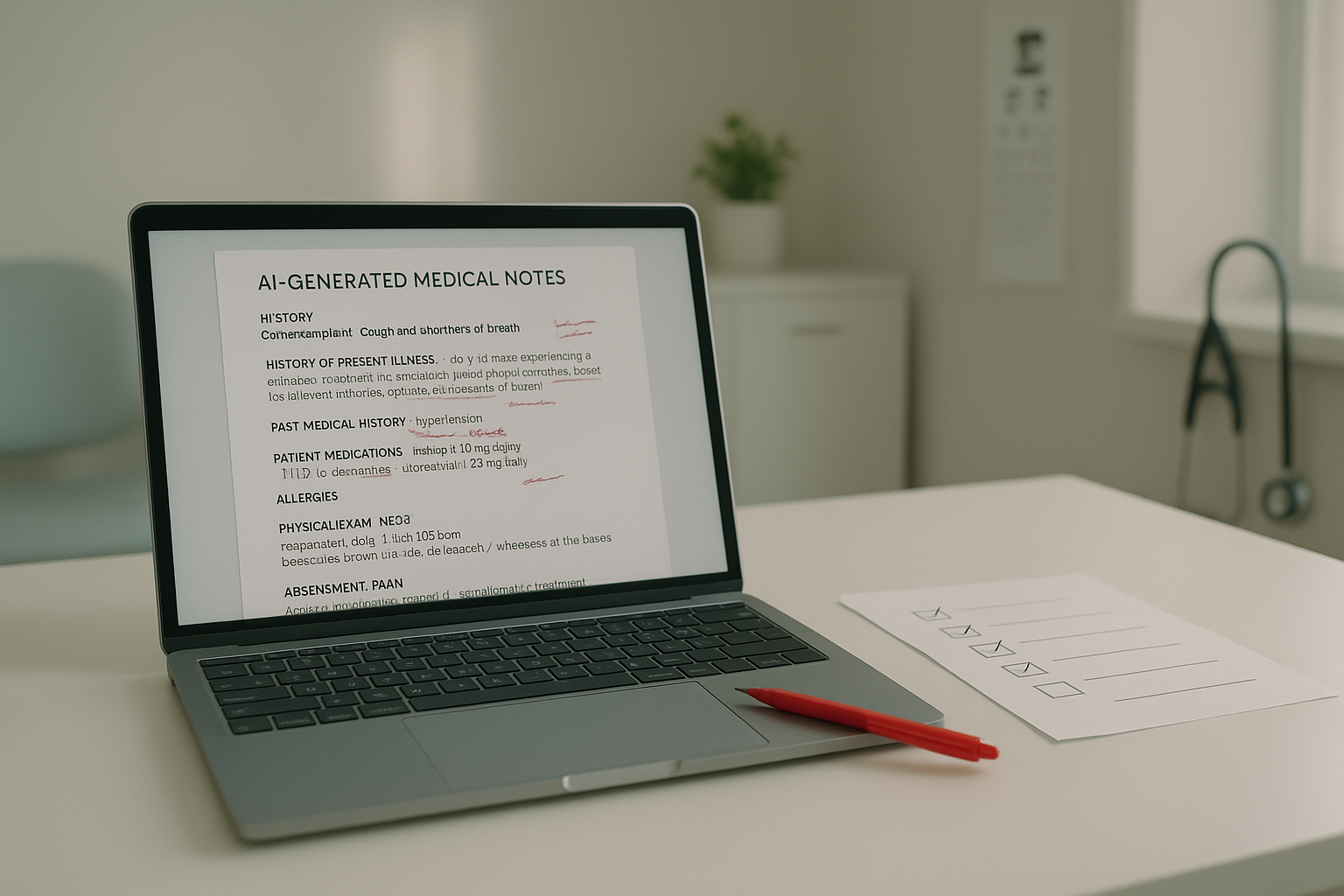
AI tools are increasingly used to draft clinical notes, and many clinicians rely on them to save time. However, proofreading AI notes is essential to catch errors, gaps, and misinterpretations before they reach patient records.
Why proofreading AI notes matters in medicine
AI-generated notes can speed up documentation, but they may misstate diagnoses, mislabel medications, or omit important clinical details. A single unchecked error can ripple through a chart, affect decisions, or prompt unnecessary tests. Human review helps ensure accuracy, preserves patient safety, and maintains professional standards in record-keeping.
By applying careful proofreading, teams can preserve the clarity of clinical reasoning, ensure consistent terminology, and align notes with privacy and compliance guidelines. This practice supports trust in the medical record and reduces the risk of downstream misunderstandings.
Common errors in AI-generated notes
Understanding typical pitfalls helps readers approach AI-produced content with a critical eye. Common issues include ambiguous phrasing, outdated guidelines, incorrect drug names, or missing vital signs and histories. AI summaries may conflate two separate cases or omit recent test results, leading to confusion for anyone who reads the record later.
Ambiguities, such as vague plans or uncertain next steps, can leave readers unsure about what was decided. In some cases, patient identifiers or contextual details might be wrong or incomplete, which can create privacy or safety concerns. Recognizing these patterns makes it easier to catch errors during review.
A practical proofreading checklist
Use a focused, repeatable process to review AI notes. Below is a concise checklist you can adapt to your workflow:
- Verify patient identifiers and encounter context (name, date, location) to ensure the note matches the correct record.
- Cross-check key data against orders, lab results, and original documentation to confirm accuracy.
- Confirm medication names, doses, routes, and frequency; watch for look-alike drug names.
- Ensure the note is complete: history, exam, assessment, plan, and any follow-up instructions are present and coherent.
- Flag uncertainties and document the source of AI suggestions or edits for traceability.
Workflow ideas to reduce errors
Integrating a proofreading step into the clinical workflow can reduce risk without slowing care. Assign a designated reviewer, set aside a fixed time window for edits, and use version control so changes are tracked. Consider creating standardized templates and checklists to guide AI note generation and review, reducing variability and oversight gaps. Foster a culture where clinicians feel comfortable questioning AI output and documenting concerns when needed.
Key Takeaways
- Proofreading AI notes helps catch errors before they impact patient care.
- Always verify details against primary sources and orders.
- Maintain transparency with versioning and clear documentation of changes.
- Build dedicated time for human review within the workflow.
- AI is a tool to support clinicians, not a substitute for professional judgment.