Tag: ai-tools

  • The importance of proofreading AI notes in medicine

    The importance of proofreading AI notes in medicine

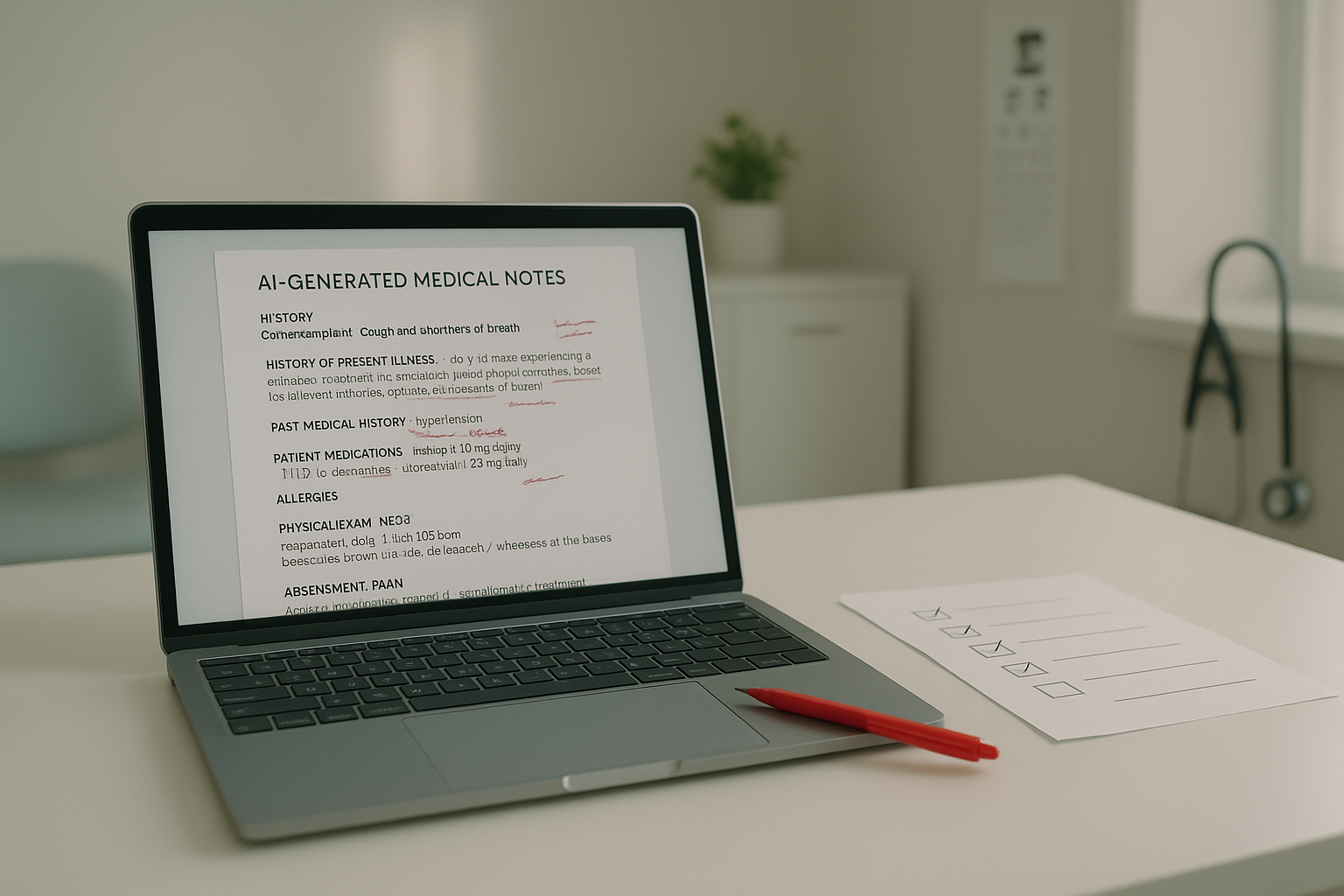
    AI tools are increasingly used to draft clinical notes, and many clinicians rely on them to save time. However, proofreading AI notes is essential to catch errors, gaps, and misinterpretations before they reach patient records.

    Why proofreading AI notes matters in medicine

    AI-generated notes can speed up documentation, but they may misstate diagnoses, mislabel medications, or omit important clinical details. A single unchecked error can ripple through a chart, affect decisions, or prompt unnecessary tests. Human review helps ensure accuracy, preserves patient safety, and maintains professional standards in record-keeping.

    By applying careful proofreading, teams can preserve the clarity of clinical reasoning, ensure consistent terminology, and align notes with privacy and compliance guidelines. This practice supports trust in the medical record and reduces the risk of downstream misunderstandings.

    Common errors in AI-generated notes

    Understanding typical pitfalls helps readers approach AI-produced content with a critical eye. Common issues include ambiguous phrasing, outdated guidelines, incorrect drug names, or missing vital signs and histories. AI summaries may conflate two separate cases or omit recent test results, leading to confusion for anyone who reads the record later.

    Ambiguities, such as vague plans or uncertain next steps, can leave readers unsure about what was decided. In some cases, patient identifiers or contextual details might be wrong or incomplete, which can create privacy or safety concerns. Recognizing these patterns makes it easier to catch errors during review.

    A practical proofreading checklist

    Use a focused, repeatable process to review AI notes. Below is a concise checklist you can adapt to your workflow:

    1. Verify patient identifiers and encounter context (name, date, location) to ensure the note matches the correct record.
    2. Cross-check key data against orders, lab results, and original documentation to confirm accuracy.
    3. Confirm medication names, doses, routes, and frequency; watch for look-alike drug names.
    4. Ensure the note is complete: history, exam, assessment, plan, and any follow-up instructions are present and coherent.
    5. Flag uncertainties and document the source of AI suggestions or edits for traceability.

    Workflow ideas to reduce errors

    Integrating a proofreading step into the clinical workflow can reduce risk without slowing care. Assign a designated reviewer, set aside a fixed time window for edits, and use version control so changes are tracked. Consider creating standardized templates and checklists to guide AI note generation and review, reducing variability and oversight gaps. Foster a culture where clinicians feel comfortable questioning AI output and documenting concerns when needed.

    Key Takeaways

    • Proofreading AI notes helps catch errors before they impact patient care.
    • Always verify details against primary sources and orders.
    • Maintain transparency with versioning and clear documentation of changes.
    • Build dedicated time for human review within the workflow.
    • AI is a tool to support clinicians, not a substitute for professional judgment.
  • AI notes legality in medicine: What clinicians should know

    AI notes legality in medicine: What clinicians should know

    As AI tools like ChatGPT enter daily clinical workflows, questions about AI notes legality rise among clinicians and administrators. This article examines how AI-generated notes intersect with privacy rules, professional standards, and accountability. We’ll outline what constitutes protected information, what to expect under HIPAA, and practical steps to minimize legal risk while still using AI to support documentation.

    First, it’s essential to understand what counts as protected information. PHI, or protected health information, includes identifiers like names, dates, locations, and certain health details. When AI is used to draft or edit notes, the risk is not only about content but also where data is stored, who can access it, and how data is transmitted. A note that includes PHI sent to an external AI service can trigger privacy rules that require safeguards and documented consent where appropriate.

    HIPAA, data handling, and AI tools

    Under HIPAA, covered entities and business associates must ensure reasonable safeguards for PHI used or disclosed to third parties. When AI tools process notes, providers should review vendor privacy policies, data flow diagrams, and whether the service stores or telegraphs PHI for model training. In many cases, de-identification or using a role-based workflow reduces risk, but it does not automatically remove liability if something goes wrong.

    PHI and de-identification

    De-identification removes direct identifiers, but residual data can still create privacy concerns if the output re-identifies someone or if sensitive health details are exposed. Before integrating AI into note drafting, teams should map data flows, determine what data is sent to the tool, and implement access controls to prevent unauthorized use.

    Documentation standards and accountability

    Guidelines for medical documentation emphasize accuracy, completeness, and clarity. When AI contributes to notes, the clinician remains responsible for the final content. Mistakes introduced by AI, misinterpretations of symptoms, or misattributed timepoints can create liability. Documentation should be reviewed thoroughly, with changes auditable and time-stamped, so teams can track edits and rationale.

    Practical steps to use AI in notes responsibly

    • Limit data sent to AI tools to what is strictly necessary and avoid unnecessary PHI.
    • Review every AI-generated draft carefully; use AI as a drafting assistant, not a final arbiter.
    • Document the role of AI in the note, including any edits made and the date of review.
    • Ensure strong access controls and encryption for tools and storage locations.
    • Agree on data-handling policies with vendors, including data retention and deletion terms.

    Contracts, data ownership, and policy considerations

    When adopting AI for note-writing, organizations should examine vendor contracts for data ownership, training data usage, and consent requirements. Providers may offer keeping copies of notes or using inputs to improve models; clinicians should understand these implications and align them with institutional policies. Policies should specify who is responsible for data in the event of a breach and how patients are informed if AI was used in their chart.

    Key Takeaways

    • AI notes legality hinges on protecting PHI and following privacy rules.
    • Clinicians retain responsibility for the accuracy and integrity of notes created with AI assistance.
    • Review, audit trails, and well-defined vendor agreements reduce legal risk.
    • Limit data sharing with AI tools and implement strong security controls.