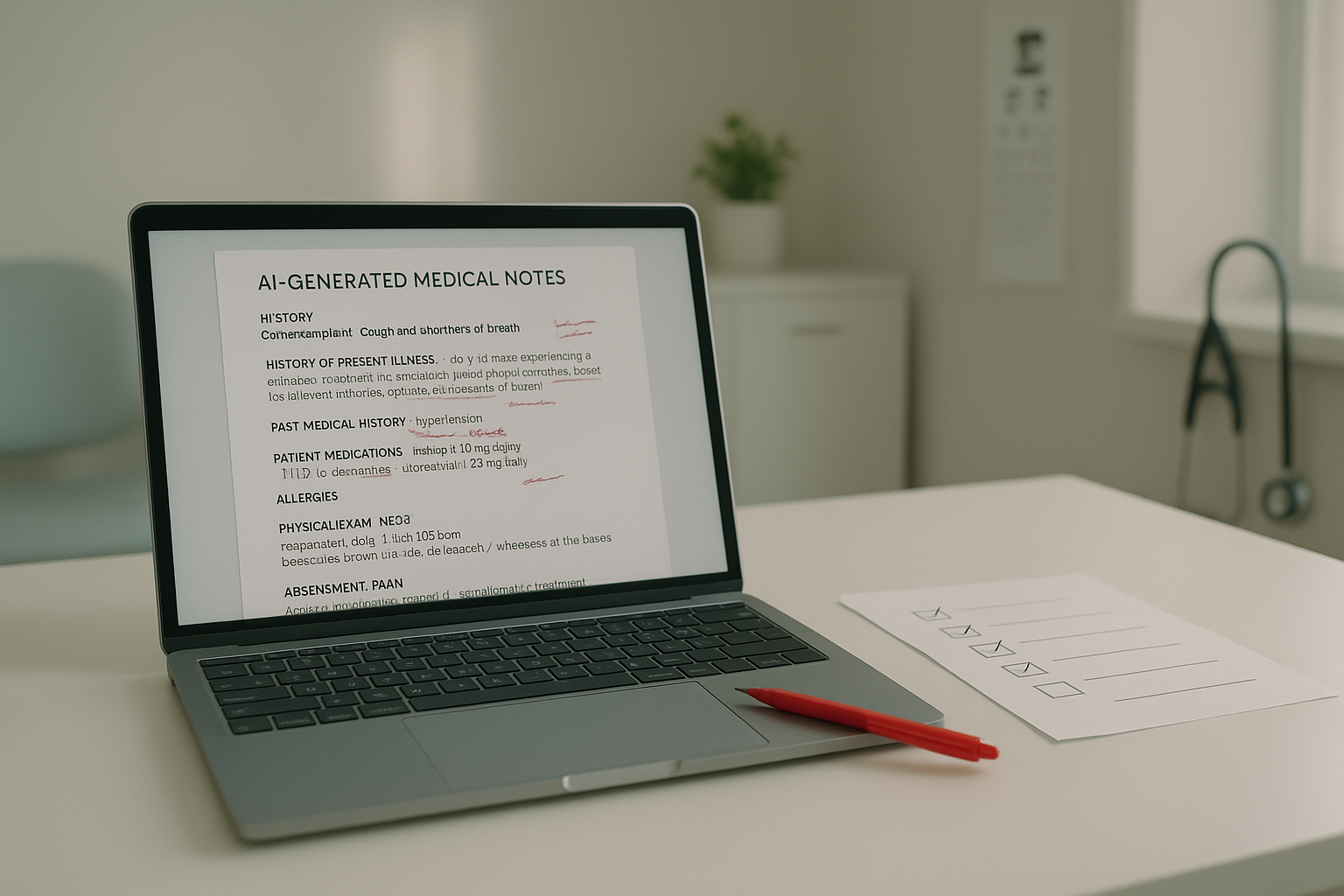
Ambient dictation AI is changing how notes get created in primary care. This technology uses ambient listening and natural language processing to draft clinical documentation, aiming to reduce clinician workload and standardize content. This article explains the concept, compares AI-generated versus human-produced notes in broad terms, and highlights considerations for evaluating quality.
What is ambient dictation AI?
Ambient dictation AI refers to systems that listen to a care encounter and translate spoken information into a structured note. When integrated with the electronic health record, these tools can organize patient history, exam findings, assessment, and plan into a draft document. The goal is to capture more of what happens during a visit and to streamline documentation so clinicians can focus more on patient care.
How it works in practice
In practical use, the AI may pick up clinician prompts, patient statements, and scripted templates to generate a first draft. The draft can then be reviewed, edited, and finalized by the clinician. Privacy, consent, and data security are important considerations, since the notes may include PHI and sensitive health information.
How AI notes compare to human notes
AI-generated notes can mirror the structure of traditional documentation and often include standard sections that improve consistency. However, the quality can vary based on the encounter, the model’s training, and how well prompts guide the AI. Human-produced notes may reflect nuanced clinical reasoning, tone, and context that are harder for an algorithm to capture. Clinicians should anticipate differences in wording, emphasis, and the level of detail in patient concerns, social factors, and follow-up plans.
Because AI drafts are not final decisions, they rely on clinician review to ensure accuracy and relevance. Ambiguities or misinterpretations can occur if the AI mishears a term, misattributes a symptom, or blends information from multiple visits. As a result, accuracy checks and a clear editing process are essential parts of using ambient dictation AI in practice.
Benefits and caveats
Using ambient dictation AI can offer several potential benefits, along with important caveats:
- Reduced clerical burden and faster note creation
- More consistent documentation structure across encounters
- Potential for improved legibility and accessibility of notes
- Risk of errors, missing context, or misinterpretation if not carefully reviewed
- Privacy, security, and compliance considerations with voice data
Practical considerations for clinics
For clinics evaluating ambient dictation AI, practical steps can help maintain high documentation quality while leveraging efficiency gains:
- Obtain informed consent and implement transparent privacy controls for voice data
- Set up a clear review and editing workflow so clinicians validate AI drafts before finalizing notes
- Define prompts and templates to guide the AI toward consistent content and reduce variability
- Monitor quality metrics such as completeness, accuracy, and readability in a regular audit cycle
- Provide training on how to phrase prompts, manage corrections, and document troubleshooting steps
Future directions
The landscape of ambient dictation AI is evolving with advances in natural language understanding and medical knowledge models. Ongoing improvements aim to reduce errors, capture nuanced clinical reasoning, and better align draft notes with individual practice patterns. As tools mature, clinics may adopt more robust governance, clearer operator controls, and standardized benchmarks to assess note quality over time.
Key Takeaways
- Ambient dictation AI can draft clinical notes from encounters, potentially easing the documentation load.
- AI-generated notes may differ in phrasing and detail; clinician review remains essential for accuracy.
- Privacy, consent, and secure handling of voice data are critical considerations.
- Establish guidelines, prompts, and quality checks to maintain consistent, high-quality documentation.